Why the Flux 3 Image Model Changes Visual Intelligence
A New Architecture for Visual Intelligence
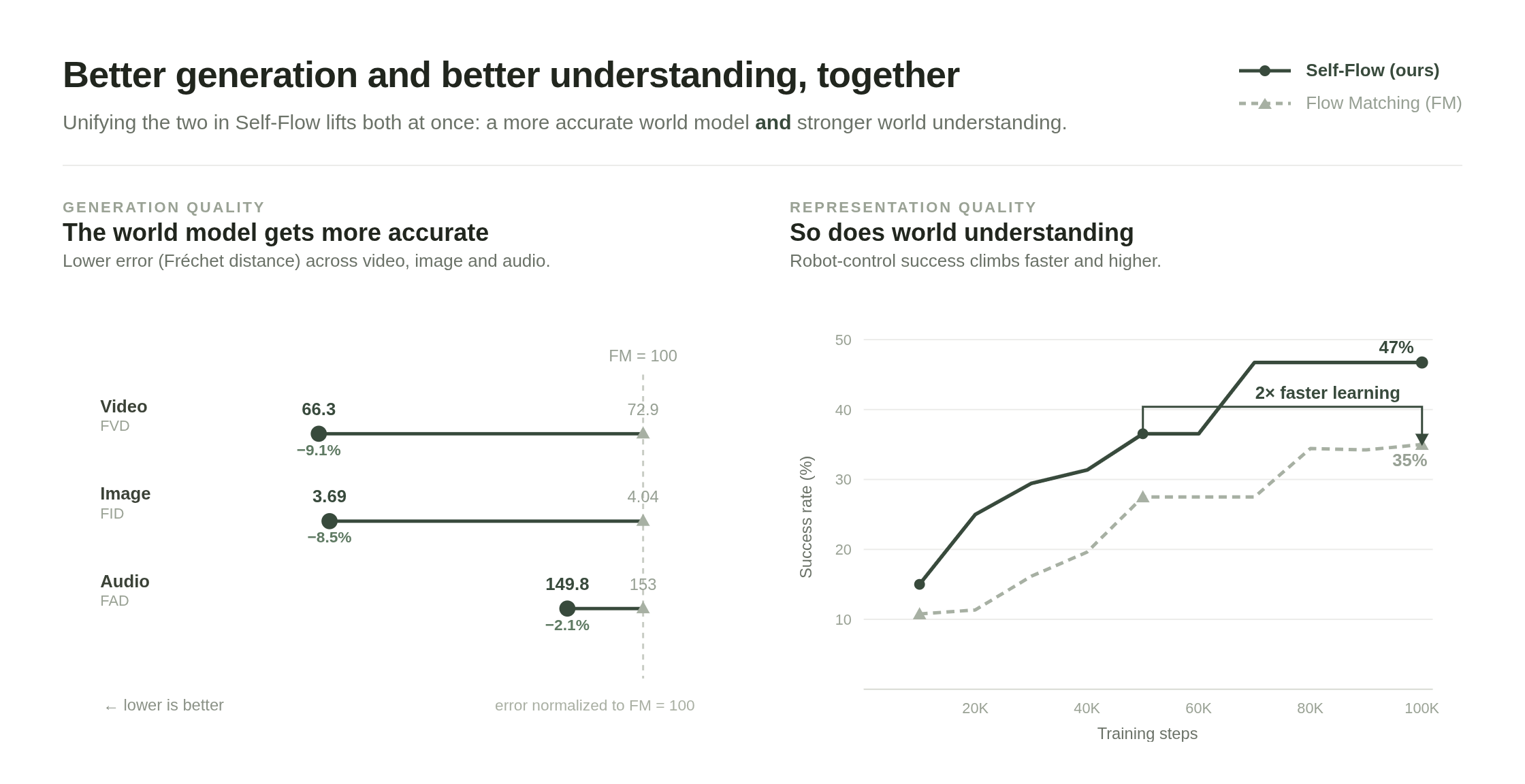
When I first started working with generative AI in earnest, the landscape was split into separate silos. You had image generation tools that produced static pictures, video synthesis systems that struggled with coherence across frames, and audio processing models that existed in their own domain. Each served a purpose, but none felt like a step toward actual visual intelligence. That is where Black Forest Labs has shifted things with the flux 3 model. It is not just another diffusion model tuned for prettier outputs. It is a multimodal foundation model that treats images, video, and audio as part of one unified architecture. The result is something that feels closer to how humans actually perceive the world: as a continuous, integrated stream of sensory information.
The first time I generated a flux 3 image, I noticed something subtle but important. The model did not just render a scene based on a text prompt. It seemed to understand the spatial relationships, the lighting, and the implied context in a way that earlier text-to-image systems often miss. That is partly because the flux 3 model is built on a transformer architecture that handles multiple modalities at once. Instead of training separate neural networks for each task and stitching them together, Black Forest Labs designed a single foundation model that learns cross-modal patterns from the ground up. That changes how the model represents concepts in latent space.
How the Flux 3 Image Handles Real-World Understanding
One of the hardest problems in generative AI is getting a model to produce outputs that make sense in the real world. Pure diffusion models often generate beautiful images that contain logical absurdities: a chair floating in midair, a person with six fingers, a scene lit from two incompatible suns. The flux 3 model reduces these errors because it learns from multiple modalities simultaneously. When you ask for a flux 3 image of a person sitting at a desk in a dim room, the model does not just rely on static image data. It draws on video synthesis training that teaches it how objects behave over time, and on audio processing training that helps it understand the acoustics of the environment. That cross-modal learning leads to outputs that feel grounded.

I spent a few days testing the model against a set of prompts that usually trip up text-to-image generators. One prompt was "a glass of water on a wooden table with sunlight coming from the left, casting a shadow to the right." Many models get the shadow direction wrong or render the glass without refraction. The flux 3 image came back with a convincing refraction pattern and a soft shadow that matched the light source. It was not perfect, but it was noticeably better. That is the kind of real-world understanding that comes from a unified architecture that does not treat each modality as an island.
Beyond Static Images: Video and Audio in One Model
What makes the flux 3 model more than just another image generation tool is that it handles video synthesis and audio processing natively. If you have ever tried to generate a short video clip with separate image and audio models, you know the pain of alignment. The video might look good, but the audio feels stitched on. With a multimodal foundation model, the audio and visual streams are generated together, informed by the same latent representation. That means the sound of rain actually matches the rhythm of the rain falling in the video. It is a small detail, but it makes a big difference for anyone building interactive experiences or simulation tools.
Black Forest Labs has also released parts of the model as open source, which is a significant move for the field. Open sourcing a model of this scale allows researchers and developers to inspect the neural network, fine-tune it for specific use cases, and contribute improvements. It also accelerates the pace of research in visual reasoning and cross-modal learning. I have seen early experiments where people used the open source version to build a tool that generates short instructional videos with synchronized voiceover, all from a single text prompt. That would have required a pipeline of three or four separate models a year ago.
Practical Trade-Offs and Real Use Cases
No model is a silver bullet, and the flux 3 model has its own set of trade-offs. Because it is a large foundation model, it requires serious hardware to run locally. The open source weights are available, but you need a GPU with substantial memory to do inference at a reasonable speed. For many developers, the cloud-based API is the more practical route. The latency is acceptable for single image generation, but real-time video synthesis is still a challenge. The model also tends to be more conservative in its stylistic range compared to some specialized text-to-image models. If you want hyper-stylized anime art or very abstract compositions, a dedicated fine-tuned model might serve you better.
Where the flux 3 model excels is in applications that require consistency across modalities. Consider a scenario where you are building a virtual training environment for emergency responders. You need realistic scenes, believable motion, and accurate ambient sounds. With a unified architecture, you can generate a scene of a fire alarm going off in an office building, and the visual and audio outputs will share the same spatial and temporal logic. That is hard to achieve with separate models. The same advantage applies to game development, film pre-visualization, and accessibility tools that generate descriptions of visual content for people with visual impairments.
The Role of Open Source in Advancing the Field
Black Forest Labs’ decision to release the flux 3 model under an open source license is a bet on community-driven progress. It is not the first open source foundation model, but it is one of the few that unifies three major modalities from the start. That gives researchers a rare opportunity to study cross-modal learning at scale. I have already seen papers that use the model to investigate how visual reasoning emerges from joint training on image, video, and audio data. The transformer architecture at its core makes it a natural fit for these kinds of experiments, because the attention mechanism can learn relationships across modalities without needing explicit alignment rules.
For developers who are building products, the open source release means they can integrate the model without being locked into a proprietary ecosystem. They can also contribute bug fixes, optimizations, and new training data that benefit the whole community. That is a healthy dynamic for a field that sometimes feels dominated by closed, black-box systems.
Where Visual Intelligence Is Headed
The trajectory of generative AI is moving toward models that do not just produce content but understand the content they produce. The flux 3 model is a step in that direction. It is not yet at the point where it can reason about a scene the way a human does, but it shows that a unified architecture can capture more of the structure that makes visual intelligence possible. The next few years will likely bring models that combine even more modalities, perhaps including touch or proprioception, and that will open up new frontiers in robotics, simulation, and human-computer interaction.
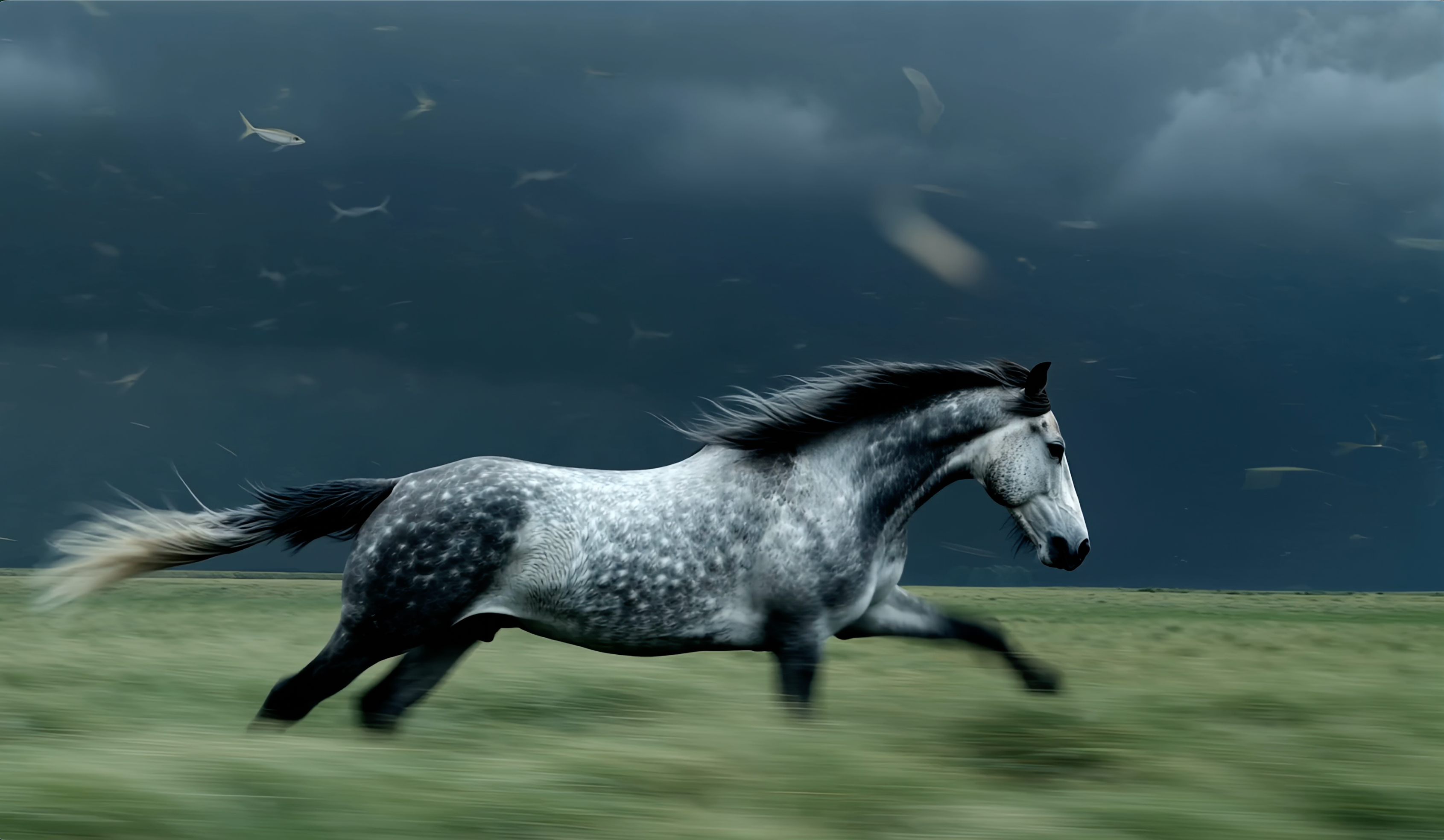
For now, the flux 3 model is a practical tool for anyone who needs consistent, high-quality outputs across image, video, and audio. It is also a research platform that will help the field understand how to build machines that perceive the world more like we do. If you work in generative AI, computer vision, or multimedia production, it is worth spending some time with the model. The quality of the outputs, especially the flux 3 image generation, is strong enough to be useful in production workflows, and the open source release ensures that the model will only get better as the community iterates on it.